
MFA Creative Writing
Fiction | Creative Nonfiction | Poetry
Megha Majumdar on Moral Dilemmas in Times of Crisis
Among the pleasures of teaching at Hunter is working with wonderful colleagues who are producing wonderful work. This fall that work includes Megha Majumdar’s new novel, A Guardian and a Thief. Megha, of course, is not only a current faculty member, but a writer who attended the program herself, so it’s especially satisfying to see the reception the book has received, becoming a finalist for the National Book Award before it was released, and then being chosen for Oprah’s Book Club. It’s a tenacious book—fierce, and sleek and uncompromising, and a great example to our students of the art of the novel. In this season’s edition of the Hunter MFA Interview, second-year fiction student Celeste Scott discussed Megha’s latest book with her and together they produced the conversation you’ll find below. Enjoy their exchange, and pick up the book.
Adam Haslett, Program Director
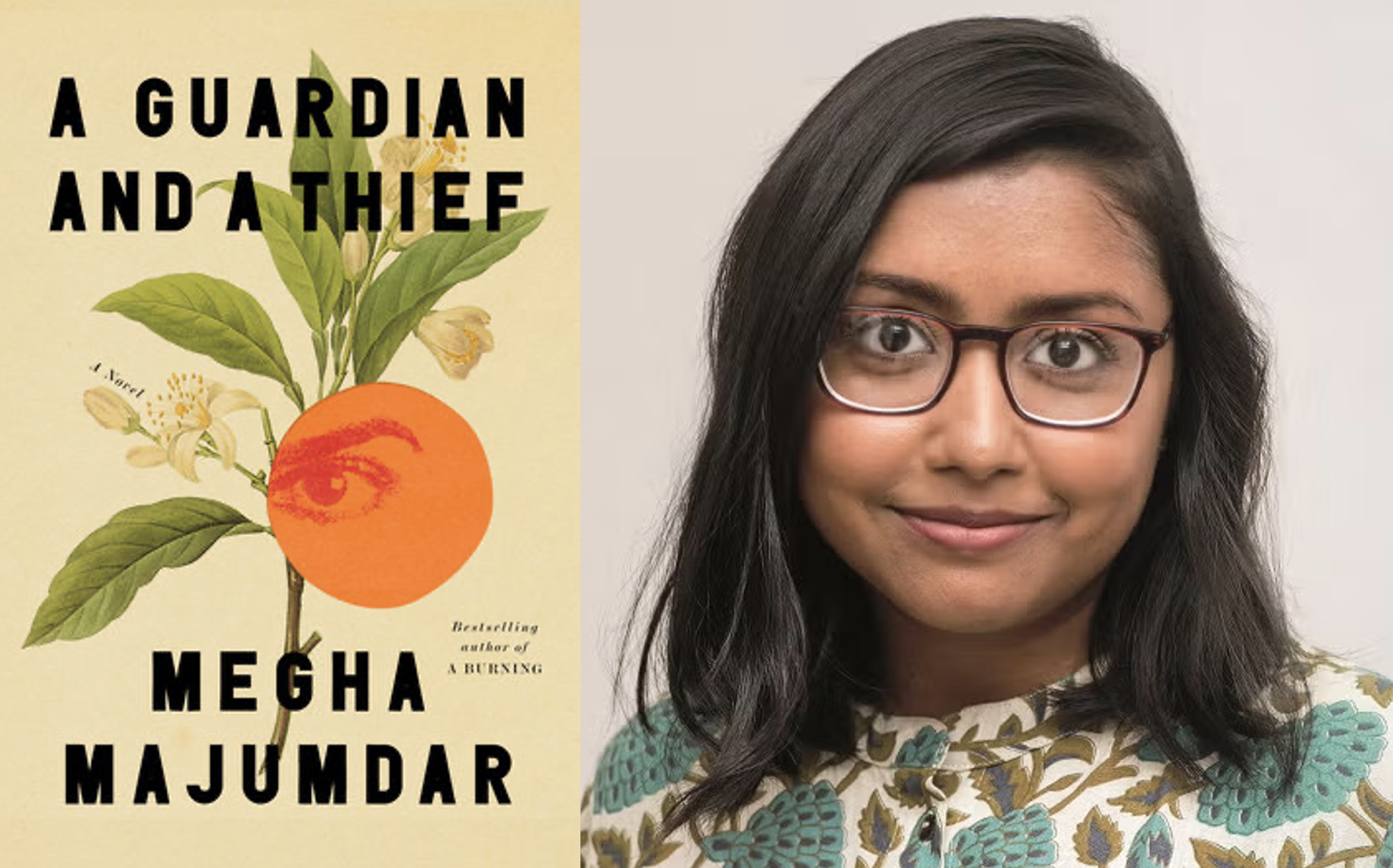
Megha Majumdar is the author of the novel A Guardian and a Thief, which is a finalist for the 2025 National Book Award, and was the Oprah's Book Club pick for October 2025. Her first book, the New York Times bestselling novel A Burning, was nominated for the National Book Award, the National Book Critics Circle's John Leonard Prize, and the American Library Association's Andrew Carnegie Medal. In India, it won a Sahitya Akademi Yuva Puraskar. It was named one of the best books of the year by media including The Washington Post, The New York Times, NPR, The Atlantic, Vogue, and TIME Magazine. Her work has been supported by the Whiting, Civitella Ranieri, and Hawthornden foundations. Born and raised in Kolkata, India, she now lives in New York.
Celeste Scott is a fiction student in her second year of Hunter's MFA program. Her work explores interpersonal dynamics, evangelicalism, desire, and adolescence. Her fiction has been published in the Washington Square Review.
This interview occurred on October 2, 2025, twelve days before publication.
Scott: What would you say was the kernel of A Guardian and a Thief? At what point did you know that you had a novel-length story on your hands?
Majumdar: I began this book thinking about what love and hope might look like in a situation of crisis. I brought that into my awareness of the future of my hometown, Kolkata, India, which is one of the cities in the world which is most profoundly affected by climate change, and there are predictions that it will grow even hotter and that it will endure more storms. So, I was thinking about, in that kind of crisis, in this particular place, what will we do when ideals that we think are noble and unassailable like love and hope become something vicious and mean? And what do we do when our love for our children comes up against the love that we have for our community, our friends and neighbors? So, I was very drawn to thinking through the complexity behind words like "hope." And that's where it started.
Scott: When you started writing the novel, did you have in mind which character or characters would be the "guardian" and who was going to be the "thief?" Did the characters surprise you at all as they came to life on the page?
Majumdar: You know a funny thing is, initially, I had this idea of moral dilemmas in this climate crisis world, but I thought that the main character was going to be a child of maybe 10 or 11-years-old. I spent a long time and many drafts trying to make this other character and this other plot work. And then I had my older son in 2021, and it made me really curious about the child's mother. So, I started thinking about, well, who is this mother? So initially, I guess, she was the guardian that I was thinking about.
It took me a long time to understand that the thief who was part of the story could not be a minor or secondary character. I needed to let him become the other main character, so there wouldn't be any saints or villains in the book. There would only be this opening upon the complexity of this idea of in a time of scarcity, and in a time of extreme pressure, who is a guardian and who is a thief? And can we really draw those lines cleanly?
Scott: When I started reading I was trying to identify who the "guardian" was, but then the expectations I had going into it were flipped in this really cool way that really touches on the nuance of what you're talking about. How, in times of crisis, love and hope can transform into this kind of muddy thing.
Majumdar: Yeah, "muddy" is a good word for it.
Scott: Though the novel takes place in the near future, the effects of climate change and immigration policy feel very much within reach. What effect did you hope to leave readers with given the novel's relevance to the current political moment?
Majumdar: I am very excited by fiction which feels like it has stakes in the current world, and which feels rooted in the ethical dilemmas that we deal with every day. And though this is a novel which is very much concerned with climate change, I also feel that in fiction what we have an opportunity to do is to encourage a reader to think about big ideas and big questions by making them come really close to a character's life. So, I knew that I would have to enter this world through characters who feel like they could be living today. There's nothing distant or super futuristic about their lives. They're just ordinary mothers and siblings and grandparents. Even with the secondary characters, an artist or barber, or somebody who is telling jokes on the street, it felt really important to have them be fully present in a world that is recognizable to us as very, very close to our own world.
Scott: Much of the present action of the book takes place within the span of a single week. How did you think about the use of time while writing the novel?
Majumdar: I knew that I wanted to catch these characters in a moment where they're on the edge of something. In really early drafts I thought about having the novel cover a year, but that felt too long because I really needed to keep the pressure up on these characters. And then for a while I had a draft which was ten days. I had a document where I tracked what would happen on each of these ten days, and it still felt kind of flabby and not paced in the way that I wanted. Then I finally brought it down to seven days, and that felt like it worked really well. It allowed me enough room to have these characters go through significant problems and disasters, it allowed for a significant amount of change in their circumstances. It also felt like I could move through the days swiftly.
As you know from workshop with me, I am really obsessed with plot. I love the question of, how do you make a reader think and feel? And how do you also make them feel entertained or intrigued enough to want to stay with your story? So, I also wanted to be mindful of a reader's experience moving through these days.
Scott: Were there any lessons from writing your last novel that you carried into writing this one?
Majumdar: My first novel, A Burning, felt much more straightforward. I felt very certain of the plot. It took me four years to write it. But it still felt like a really straightforward process. This novel actually felt harder. My hope is always that I become a stronger writer from book to book. I feel that I have written a stronger book, but maybe what I realized is that I'm now able to catch when my writing is not where I want it to be. Not as sophisticated, or not as precise as I want it to be. So, maybe that's what I learned: I want to be and I can be a stronger writer in the writing of this next book. And even through all of the twists and turns I just mentioned, the plot changing a lot, the characters changing a lot, I felt that I was able to stay with those twists and turns because I could feel myself becoming a stronger writer.
Scott: A piece of advice you gave me last semester is that even if you don't write every day you should try to read what you've written everyday, even if you're just reading it on the train. I really love that, and have started implementing that into my everyday routine.
Majumdar: That's great!
Scott: I was wondering if there were any other daily practices that you implement that help keep you going? Especially now that you just had another baby, I'm curious about your daily routines.
Majumdar: I often like thinking about my project through other things that I read or watch. So, if I read a story, what my mind does is think through what that story is doing well. What can I learn from it? If I use that story as a lens to look at my project, what does it reveal to me? I find it very interesting to learn from what other writers are doing really well. Right now with the baby, and with my older son, and with publication of the book coming up, I haven't been able to write every day. But there is a project that I've been working on, which I think about. I think this moment of letting it sit in my mind is very usefully showing me what elements of it feel exciting and rise to the top, and what elements feel somewhat forgettable to me.
Scott: I find that thinking about what I'm working on is such an important part of the process. Or even journaling about it, working it out in my head before even sitting down to write it.
Majumdar: Yeah, do you journal about your writing?
Scott: I do, sometimes. If I'm feeling stuck or if there's something with a character that I don't feel I fully understand, I will journal it out a little bit. Do you journal about your writing at all?
Majumdar: I don't journal at all. To me I feel like any words I'm writing or anything I'm thinking through needs to go into my current project. But maybe that's a shortsighted way of thinking about it.
Scott: I don't know. Sometimes - I think I've gotten a little bit better at this - but sometimes I would do so much pre-work with journaling that it would hinder me from actually putting it into what I'm writing. So, now I try to use it more if I'm feeling stuck.
Majumdar: That's so beautiful that you've managed to do both.
Scott: How has teaching had an effect on your writing process?
Majumdar: Oh, I love this question. I find it so energizing to be close to other writers' work. You and your colleagues, everyone at Hunter, you guys are such strong and skillful writers. I find it really invigorating to sit with your work, and think about the things that I admire in it. How are you doing the things that are beautiful and powerful and effective? And when there are moments of failure, what can we learn from them? What does the story need to flip those moments of failure?
I think that the work I see from you guys is so sophisticated, that the moments of failure are interesting. I find it very stimulating and energizing and beautiful to be exposed to all of these other modes of writing fiction, and all of these other ways in which these stories succeed. I mean, I love doing workshop. I get so much out of being close to those pages, and then discussing them with everybody. It feels like a lot of craft lessons are contained in those experiences for me.
Scott: I feel the same way being in workshop. I learn so much from talking about other people's stories and what they're working through in their own work. You went to Hunter yourself, and I was wondering if there's anything that you learned during your time in the program that has stayed with you to this day?
Majumdar: I think I learned something from the seriousness of everybody in the program. To see that you're part of this group of people who are all centering writing, which is an unusual thing to do. Everybody's centering writing, everybody is taking their own work and each other's work really seriously.
When I was in the Hunter program, and I guess this is true for anybody in any MFA program, most of the motivation comes from you. It's before the stage of publication, it's before the stage of having a book that you are talking to a book editor [about], or before the stage of having an agent that you can discuss your work with or anything like that. All of the motivation comes from your seriousness around your own work, and it's so inspiring to be with peers who demonstrate that seriousness.
Scott: Yeah, I agree. That has 100% been my experience as well in the program. And I love what you said about centering writing because that was a big thing that I wrote about in my statement of purpose, that I wanted to be in a space where writing is central to my life. And that's 100% the experience that I've had. It's been really inspiring.
Majumdar: Yeah, at Hunter the standard of work that the writers in the program are doing is so high. It's a really inspiring, energizing place to be.
To get updates on applying to the Hunter MFA Program, please REGISTER. You'll receive announcements, events news, and more.